Manifestor Anger and Informing: A Practical Guide
Explore the Human Design language of anger and informing, with practical approaches to communication and boundaries.
Short answer: Human Design describes anger as the Manifestor's “not-self theme” and informing as its strategy. These are terms within the system; they do not establish why a person feels angry or prove that informing will prevent conflict.
Anger is a common emotion with many possible causes. You can explore the Human Design language as a reflection prompt while considering the circumstances, your needs and other people's needs.
What does “informing” mean?
In Human Design teaching, informing generally means telling people who may be affected about an intended action. Jovian Archive describes it as the Manifestor strategy.
In everyday life, a clear update can help people coordinate: “I need to leave at four, so let's finish the handoff before then.” Whether a decision also requires agreement, permission or discussion depends on the situation. Shared finances, parenting, work commitments and other joint decisions deserve appropriate collaboration.
Informing does not guarantee a particular response, and a chart does not excuse disregarding someone else's boundaries.
What might anger be telling me?
Anger can arise for many reasons, including stress, frustration, feeling treated unfairly or an unmet need. A chart cannot identify the cause. Ask yourself what happened and what response would be useful.
The NHS guide to anger suggests recognizing early signs and taking steps to respond before a situation escalates.
A practical way to respond
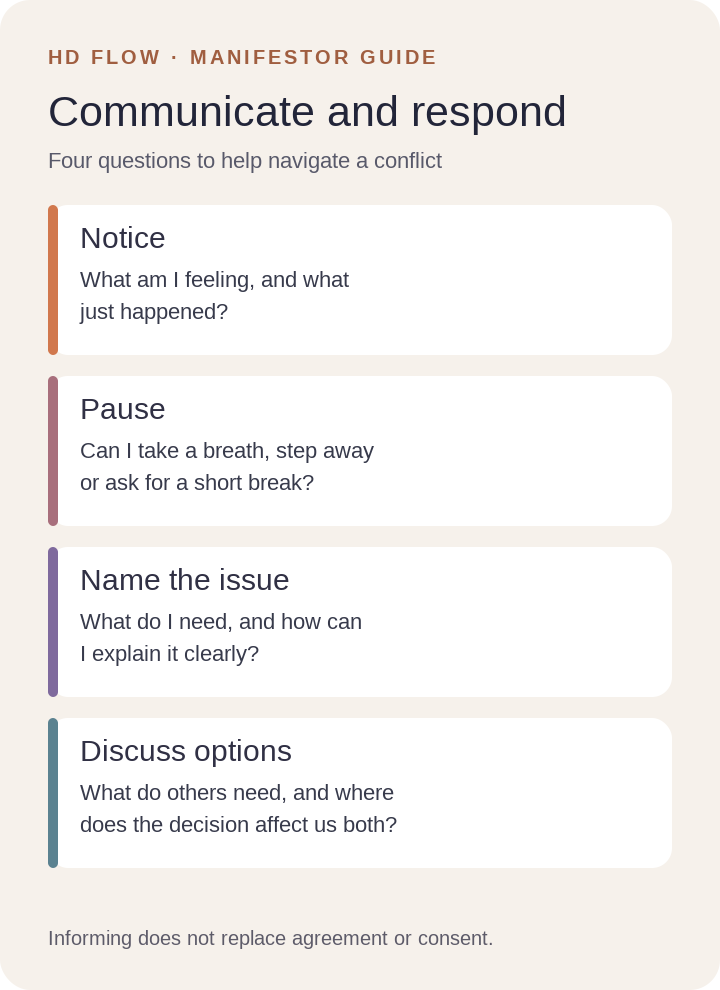
1. Notice the feeling. What is happening in your body and what just occurred? 2. Pause if you can. Take a breath, step away or ask for a short break. 3. Name the issue. For example, “I need more notice before our plans change.” 4. Discuss options. Listen to the other person and negotiate where the decision affects both of you. 5. Get support when needed. A trusted person or qualified professional may help you work through a recurring difficulty.
These steps can help anyone reflect; no type requires a particular response.
Boundaries, choice and safety
A boundary describes what you are comfortable with and how you will respond. It is different from trying to control another person. Both people can express needs and make choices.
If anger feels difficult to manage, affects relationships or leads to threatening behavior, seek appropriate professional support. If you or someone else is in immediate danger, seek emergency assistance.
Does a Manifestor need to work in bursts?
A Human Design chart does not determine your stamina, ideal working hours or need for rest. Review your workload and sleep based on your actual circumstances. The sleep guide includes practical resources.
Frequently asked questions
Does being a Manifestor mean I am an angry person?
No. A type label does not establish someone's temperament or explain any particular emotion.
Does informing replace agreement or consent?
No. A shared decision may require discussion and agreement, and consent and boundaries remain important.
Will informing always prevent conflict?
No. Communication can help people coordinate, but outcomes depend on the people and circumstances involved.
Can HD Flow calculate my chart?
Use the free Human Design chart calculator to calculate your chart in your browser. An estimated birth time can make results provisional.
Sources and related reading
- Manifestor Strategy: To Inform, Jovian Archive.
- Get Help with Anger, NHS.
- Manifestor type, relationships, and sleep, HD Flow.
See this in your own chart
Reading about the mechanics is one thing — seeing them mapped onto your own bodygraph is what makes it click. Your free chart shows your type, strategy, authority, profile, defined centers, channels and gates.